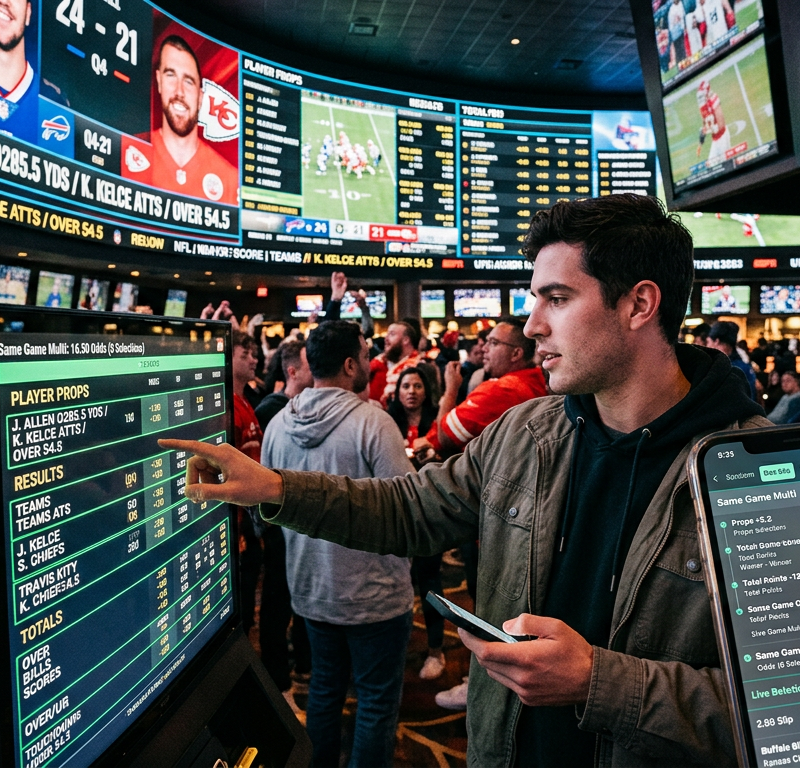

The sports betting industry stands at the precipice of its most significant transformation yet. Micro-betting, once a niche offering relegated to experimental platforms, has emerged as the dominant force reshaping how millions engage with sports in 2026. This granular approach to wagering allows bettors to place wagers on individual plays, pitches, possessions, and even specific moments within a game.
Unlike traditional pre-game or halftime betting, micro-betting operates in real-time, offering opportunities that last mere seconds. A football fan can bet on whether the next pass will be complete. A baseball enthusiast can wager on the outcome of the current at-bat. Basketball followers can predict whether the next shot attempt will come from beyond the three-point line.
The Technology Revolution Behind Micro-Betting

The explosive growth of micro-betting stems from unprecedented technological advancement. Advanced artificial intelligence systems now process live sporting events in real-time, generating betting opportunities faster than ever before. These systems analyze player positioning, historical performance data, weather conditions, and countless other variables to create odds within milliseconds.
5G networks have eliminated the latency issues that previously plagued live betting platforms. Bettors can now receive and place wagers with delays measured in mere milliseconds rather than seconds. This technological leap has transformed micro-betting from a frustrating exercise in timing to a seamless, engaging experience.
Machine learning algorithms continuously refine their predictions based on emerging patterns. These systems learn from every play, every game, and every season, creating increasingly sophisticated betting markets that capture nuances previously impossible to quantify.
Popular Micro-Betting Markets Dominating 2026
Football Micro-Markets
American football has become the crown jewel of micro-betting. Popular markets include predicting whether the next play will be a run or pass, the yardage gained on individual downs, and whether specific players will be involved in upcoming plays. Advanced markets even allow betting on formations, substitutions, and timeout usage.
The NFL's embrace of real-time data sharing has accelerated this trend. Official partnerships with major operators provide access to player tracking data, creating betting opportunities based on player speed, positioning, and biometric information.
Baseball's Pitch-by-Pitch Revolution
Baseball's natural pause-and-play rhythm makes it perfectly suited for micro-betting. Every pitch presents multiple wagering opportunities: ball or strike, swing or take, foul ball direction, and pitch type predictions. Advanced markets include predicting pitcher grip, catcher signals, and even batter stance adjustments.
Major League Baseball reported that micro-betting now accounts for over 60% of all in-game wagering volume, with the average game generating more than 400 distinct betting opportunities.
Basketball's Possession-Based Betting
Basketball's fast-paced nature creates constant micro-betting opportunities. Popular markets include predicting shot outcomes, turnover occurrences, and foul calls. Advanced markets focus on player matchups, defensive schemes, and even crowd noise levels affecting free throw shooting.
The Psychology of Instant Gratification
Micro-betting taps into fundamental human psychology patterns that traditional sports betting cannot match. The constant stream of quick-resolution wagers provides continuous dopamine hits that keep users engaged throughout entire games. Traditional betting requires waiting hours for outcomes; micro-betting delivers results in seconds.
Research conducted by the University of Nevada's Gaming Research Center found that micro-betting users show 340% higher engagement rates compared to traditional sports bettors. The average micro-betting session lasts 127 minutes, compared to just 23 minutes for traditional pre-game wagering.
This engagement pattern raises important considerations about Youth Gambling in the Digital Age – Why Early Exposure Matters and What Families Should Discuss, as the instant gratification nature of micro-betting can be particularly appealing to younger demographics.
Why Operators Are Embracing Micro-Betting
Revenue Generation Explosion
Operators love micro-betting because it dramatically increases revenue per customer. Traditional sports betting might generate 3-5 wagers per user per game. Micro-betting platforms regularly see 25-40 wagers per user per game, with some power users placing over 100 micro-bets during major sporting events.
The higher frequency of betting also means higher total handle, even with smaller individual wager amounts. Industry data shows that while average micro-bet size is 60% smaller than traditional bets, total wagering volume per user increases by 280%.
Enhanced User Retention
Micro-betting creates stickier user experiences. The constant engagement keeps users on platforms throughout entire games, reducing churn and increasing lifetime value. Traditional betting users might visit a platform once or twice per week; micro-betting users average 12-15 sessions weekly.
The social aspects of micro-betting also drive retention. Many platforms now offer real-time leaderboards, achievement systems, and social sharing features that gamify the betting experience beyond simple wagering.
Data Monetization Opportunities
The granular data generated by micro-betting creates valuable insights for operators, leagues, and media partners. Understanding which plays, situations, and players generate the most betting interest helps optimize content, advertising, and fan engagement strategies.
This data also enables more sophisticated Bankroll Management for Sports Bettors – The Kelly Criterion, Flat Staking, and Risk Tolerance tools, as operators can track betting patterns with unprecedented precision and offer personalized advice to users.
The Challenges and Risks of Micro-Betting
Regulatory Scrutiny
The rapid growth of micro-betting has attracted significant regulatory attention. Concerns about addiction potential, fair play, and market manipulation have led to increased oversight in many jurisdictions. Some states have implemented cooling-off periods between micro-bets, while others have limited the types of micro-markets available.
International regulatory bodies are developing new frameworks specifically for micro-betting, recognizing that traditional gambling regulations may not adequately address the unique challenges these markets present.
Technical Infrastructure Demands
Operating successful micro-betting platforms requires enormous technical investment. The systems must process thousands of simultaneous wagers while maintaining accuracy and speed. Platform failures during crucial moments can result in significant financial losses and user dissatisfaction.
For more insights, check out our guide on The Evolution of Mini Casino Games – From Arcade Origins to Modern Crash and Plinko (2010s–2026).
Cybersecurity also becomes more complex with micro-betting, as the high-frequency nature of transactions creates more potential attack vectors for malicious actors.
Problem Gambling Concerns
The instant gratification nature of micro-betting raises legitimate concerns about problem gambling behaviors. The rapid-fire betting opportunities can make it difficult for users to track their spending and recognize problematic patterns.
Responsible gambling advocates have called for enhanced safeguards specifically tailored to micro-betting, including mandatory bet tracking, automated loss limits, and cooling-off periods.
The Future Landscape of Micro-Betting
Integration with Emerging Technologies
Virtual and augmented reality technologies are beginning to enhance micro-betting experiences. Imagine placing bets while virtually standing on the sidelines or having real-time odds displayed as augmented reality overlays during live game attendance.
Blockchain technology is also being explored for transparent, instantaneous settlement of micro-bets, potentially eliminating disputes and reducing operational costs for operators.
Expansion Beyond Traditional Sports
Micro-betting is expanding into esports, political events, and even reality television shows. Any event with discrete, measurable moments becomes a potential micro-betting opportunity. Gaming tournaments now offer bets on individual rounds, kills, and strategic decisions.
Financial markets are also exploring micro-betting concepts, allowing users to make short-term predictions on stock movements, currency fluctuations, and commodity prices with game-like interfaces.
Personalization and AI Enhancement
Advanced AI systems are beginning to offer personalized micro-betting suggestions based on individual user preferences, betting history, and risk tolerance. These systems can identify optimal betting opportunities tailored to each user's expertise and interests.
Predictive analytics are also becoming more sophisticated, offering users insights into historical patterns and trends that might inform their micro-betting decisions.
Market Impact and Industry Transformation
Micro-betting is fundamentally altering the sports betting industry ecosystem. Traditional bookmakers are investing heavily in technology upgrades to compete with specialized micro-betting platforms. Media companies are redesigning their coverage to accommodate real-time betting integration.
Sports leagues are also adapting, with many now providing enhanced data feeds specifically designed for micro-betting markets. This partnership approach benefits all stakeholders by creating new revenue streams while enhancing fan engagement.
The rise of micro-betting has also created new career opportunities, from specialized odds compilers to real-time risk managers who monitor thousands of simultaneous markets.
Global Adoption and Regional Variations
Micro-betting adoption varies significantly across global markets. European operators have embraced the technology rapidly, with several major platforms reporting that micro-bets now comprise over 40% of their total handle. Asian markets have shown particular enthusiasm for micro-betting on soccer and basketball.
North American adoption has been more measured due to regulatory complexity, but 2026 has seen explosive growth as more states clarify their micro-betting regulations. Canada's unified approach has made it a testing ground for innovative micro-betting products.
Emerging markets in Africa and South America are leapfrogging traditional betting infrastructure, building mobile-first platforms designed specifically for micro-betting from the ground up.
Frequently Asked Questions
What exactly is micro-betting and how does it differ from traditional sports betting?
Micro-betting allows users to place wagers on individual plays, pitches, or specific moments within a game, with outcomes typically resolved within seconds or minutes. Unlike traditional betting that focuses on final game outcomes or major milestones, micro-betting offers hundreds of quick-resolution opportunities throughout a single sporting event.
How do operators set odds so quickly for micro-betting markets?
Modern micro-betting platforms use advanced artificial intelligence and machine learning algorithms that analyze real-time data streams from sporting events. These systems process player positions, historical performance, game situations, and environmental factors to generate odds within milliseconds of each new betting opportunity.
Is micro-betting legal in all jurisdictions where sports betting is allowed?
No, micro-betting regulations vary significantly by jurisdiction. While many regions that allow sports betting also permit micro-betting, some have imposed restrictions on the types of micro-markets allowed or implemented cooling-off periods between bets. Always check your local regulations before participating in micro-betting activities.
What are the risks associated with micro-betting compared to traditional sports wagering?
Micro-betting's rapid-fire nature can make it more difficult to track spending and can potentially accelerate problematic gambling behaviors. The instant gratification and high frequency of betting opportunities require stronger self-discipline and bankroll management compared to traditional sports betting.
How much money do people typically wager on individual micro-bets?
Individual micro-bets are generally smaller than traditional sports bets, with industry averages ranging from $1 to $25 per micro-wager. However, because users place many more bets per session, total wagering amounts often exceed what they might spend on traditional betting formats.
What sports are best suited for micro-betting, and why?
Sports with natural pauses and discrete plays work best for micro-betting. Baseball, American football, and tennis are particularly well-suited due to their stop-start nature. Basketball and soccer also work well, though their continuous flow requires more sophisticated real-time analysis to create betting opportunities.